- Home
- Learn & Create
- Conservation
Conservation
Conservation at the DAI
Artworks, like humans, are susceptible to aging, wear and accidents across the course of time. To help ensure artworks can be enjoyed for as many years as possible, museums employ conservation, physical interventions that aim to stabilize damage and deterioration while making artworks visually presentable.
The aim is to alter the artwork as little as possible and to only apply treatments that can be reversed if needed. This is a careful, balanced approach that contrasts with restoration, which typically refers to attempts to make an object appear “like new.” Unlike some museums, the DAI does not have a conservator or conservation lab on site. Instead, we partner with experts at other museums and independent conservation studios.
Art has been repaired throughout history but conservation as a profession is relatively new. Conservation professionals go through specialized education and training, integrating many skills into their practice. These include understanding materials through chemistry and biology, art historical knowledge and fine motor skills for doing work that requires precision and patience.
Artworks can me made from all kinds of materials, and each requires special kinds of treatment. Conservators tend to specialize in a particular area, such as paintings, works on paper (including drawings and prints), textiles and objects, which can range from ceramics and stone to wood and metal. A thorough knowledge of a range of treatment materials is also needed, from solvents and adhesives to fillers and varnishes, with an understanding of how each will interact with the artwork’s original materials and condition long-term.
The American Institute for Conservation (AIC) is the leading professional association for conservators in the U.S. To learn more about conservation or to find a conservation professional, visit their website at www.culturalheritage.org.
Conservation is ongoing at the DAI. With more than 28,000 artworks spanning 5,000 years, there is always work to be done. Below, explore some conservation transformations as well as items in need of work.
Joy of Waters
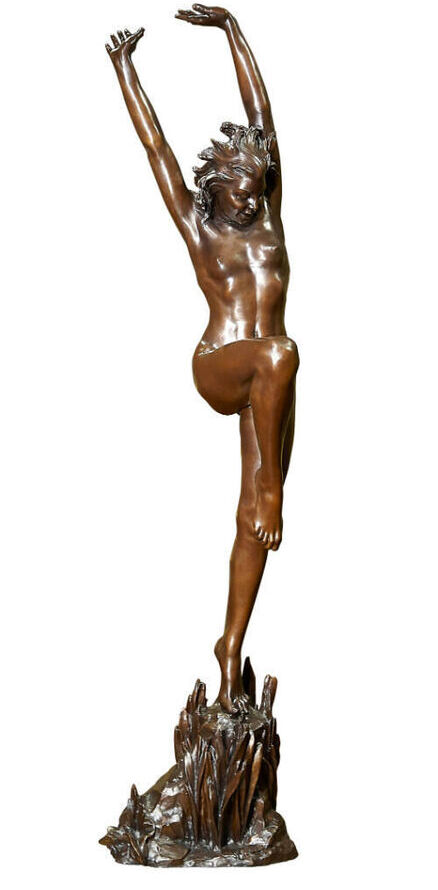
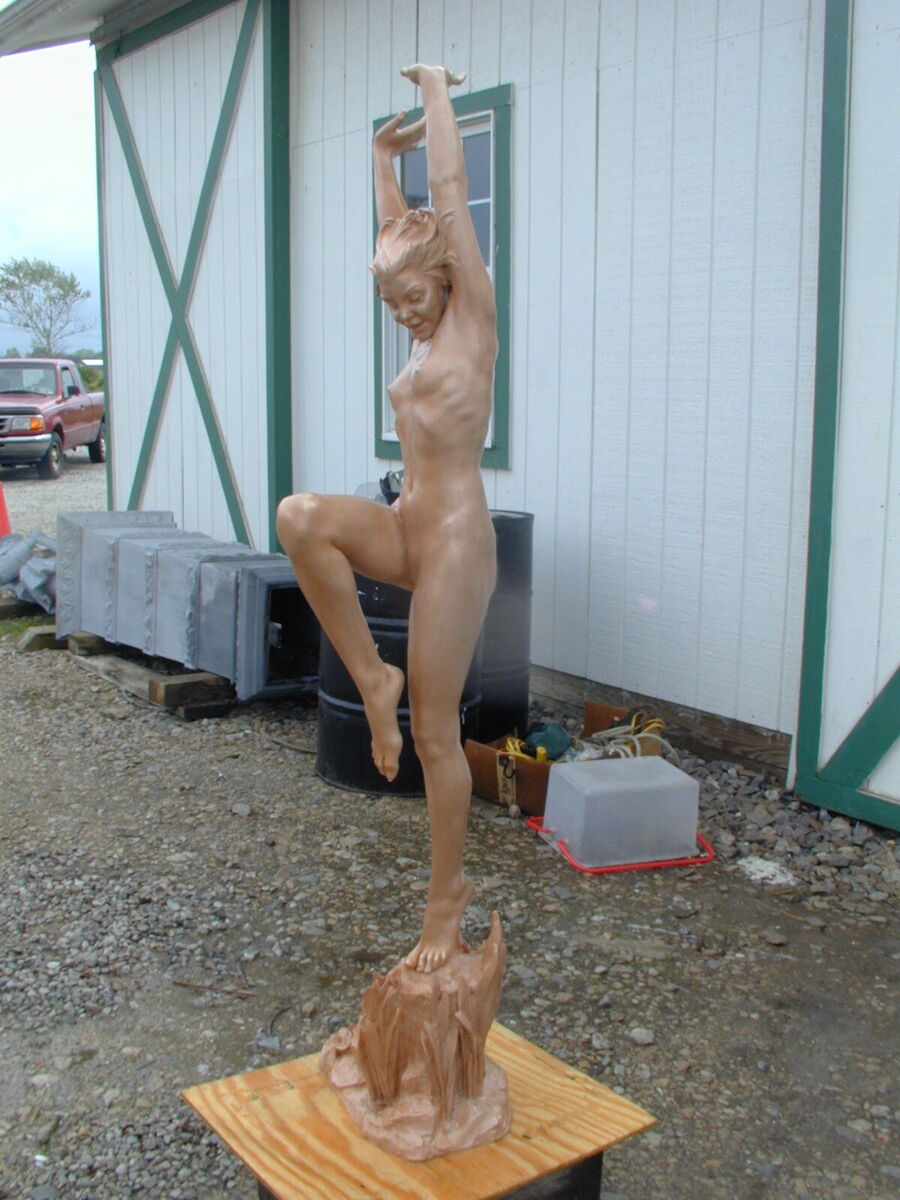
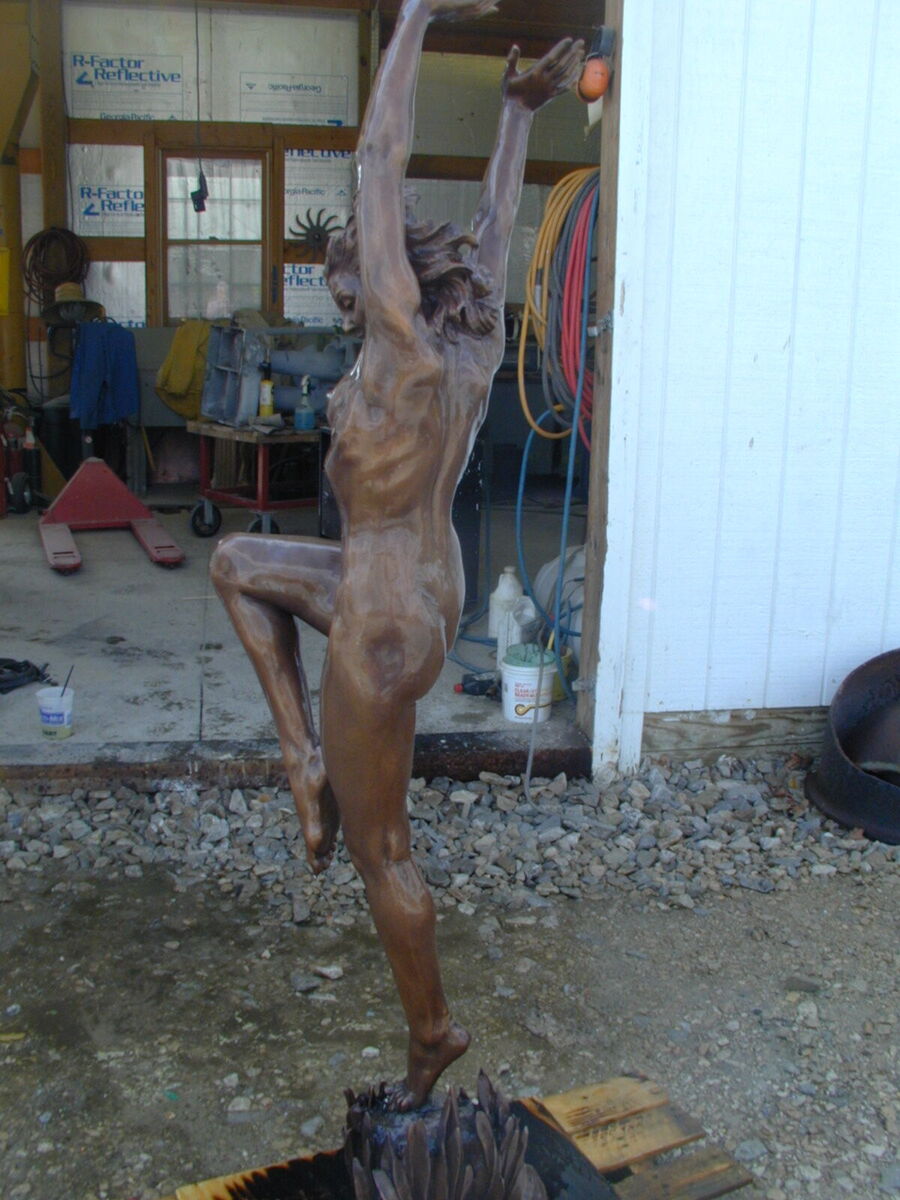
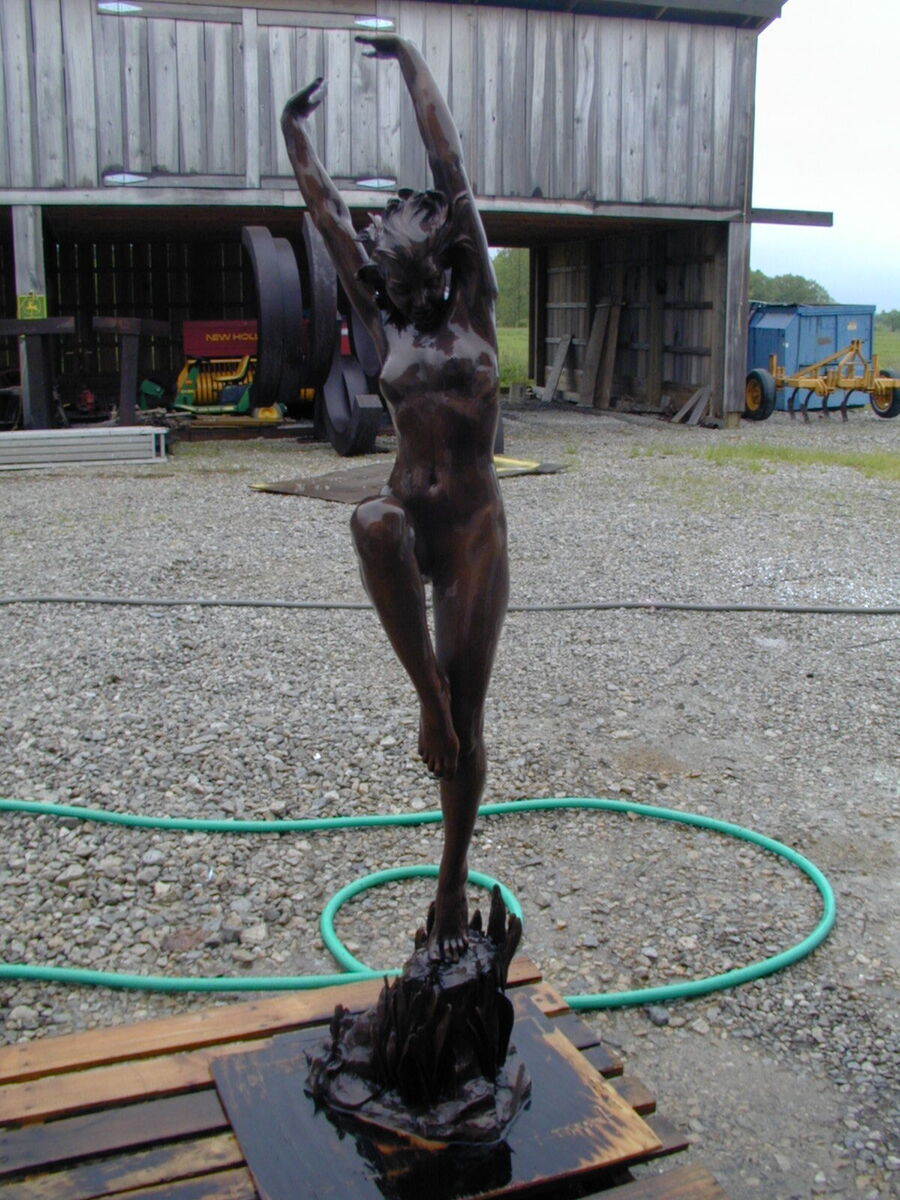
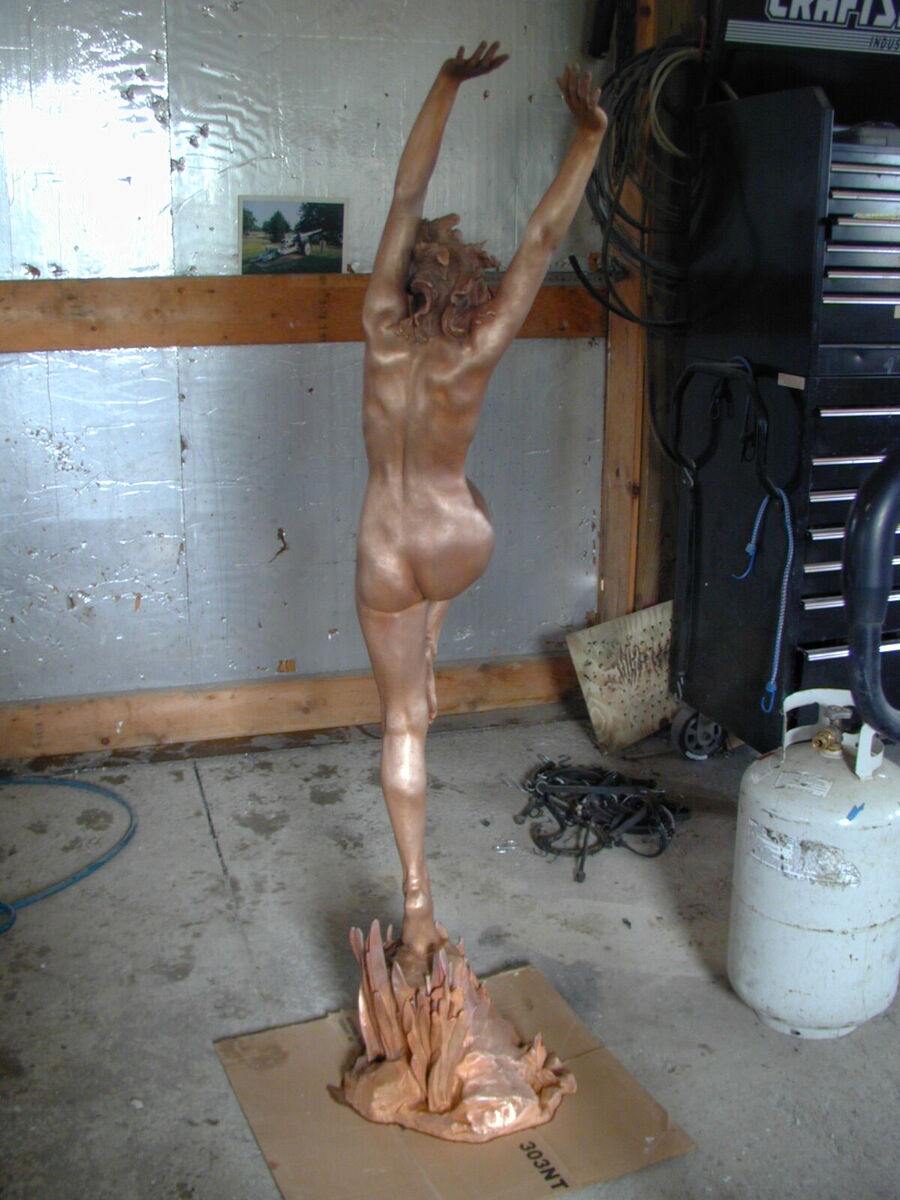
Harriet Whitney Frishmuth (American, 1880–1980), Joy of the Waters, 1917, cast bronze, 63 1/2 x 15 x 16 inches (161.3 x 38.1 x 40.6 cm). Gift of Mrs. Harrie G. Carnell, 1919.1
The first object ever accessioned by the DAI, this bronze sculpture was a working fountain and was displayed outside for decades, first at the DAI’s original location on Monument Avenue, and later in the Hale Cloister. As a result, black and green corrosion streaks developed, distracting from the figure’s modeling. The goal of the conservation treatment was to remove the corrosion and to repair minor damages, while preserving the finishing tool marks from the foundry and corrosion patterns, since these are part of the object’s history.
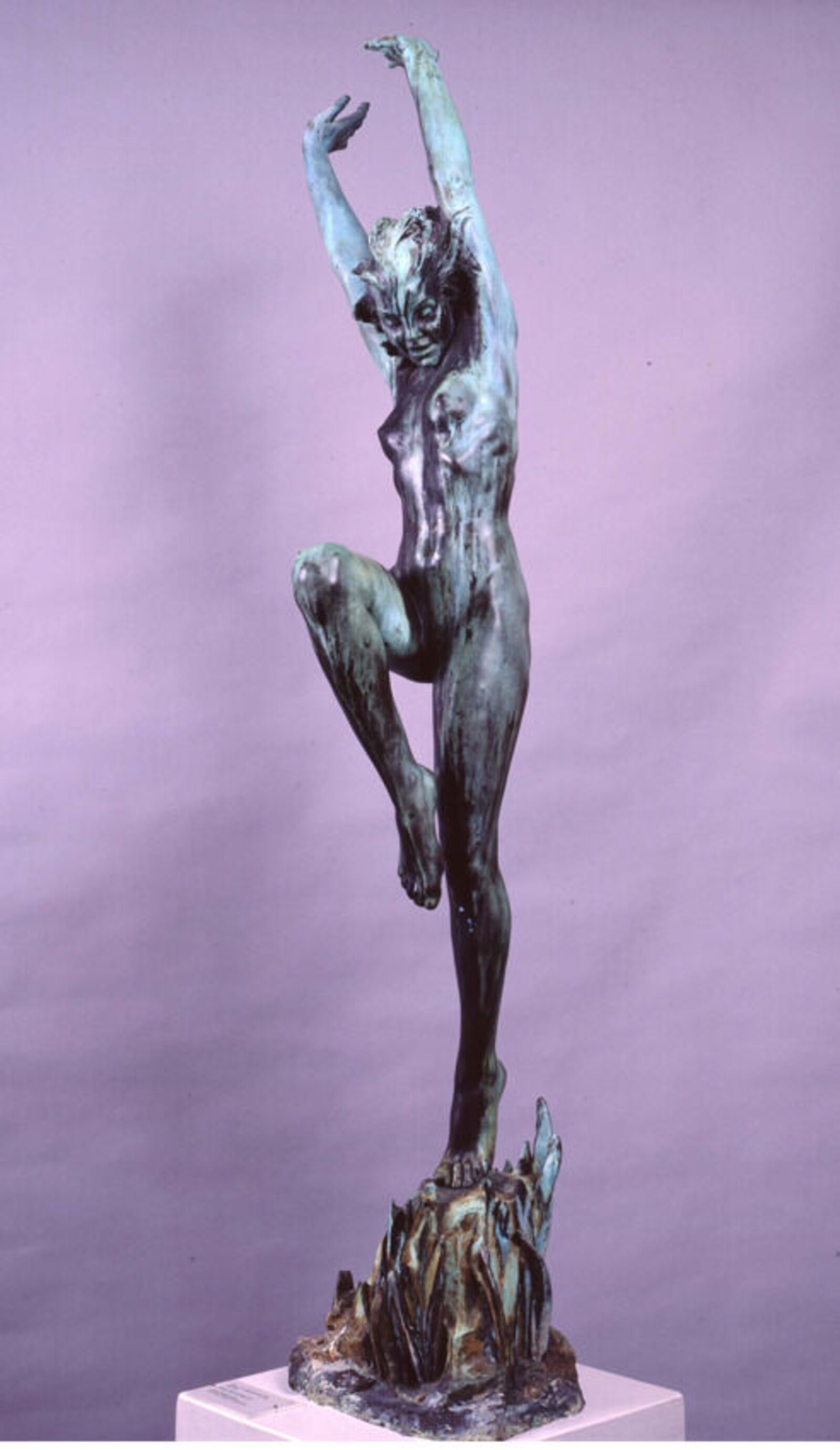
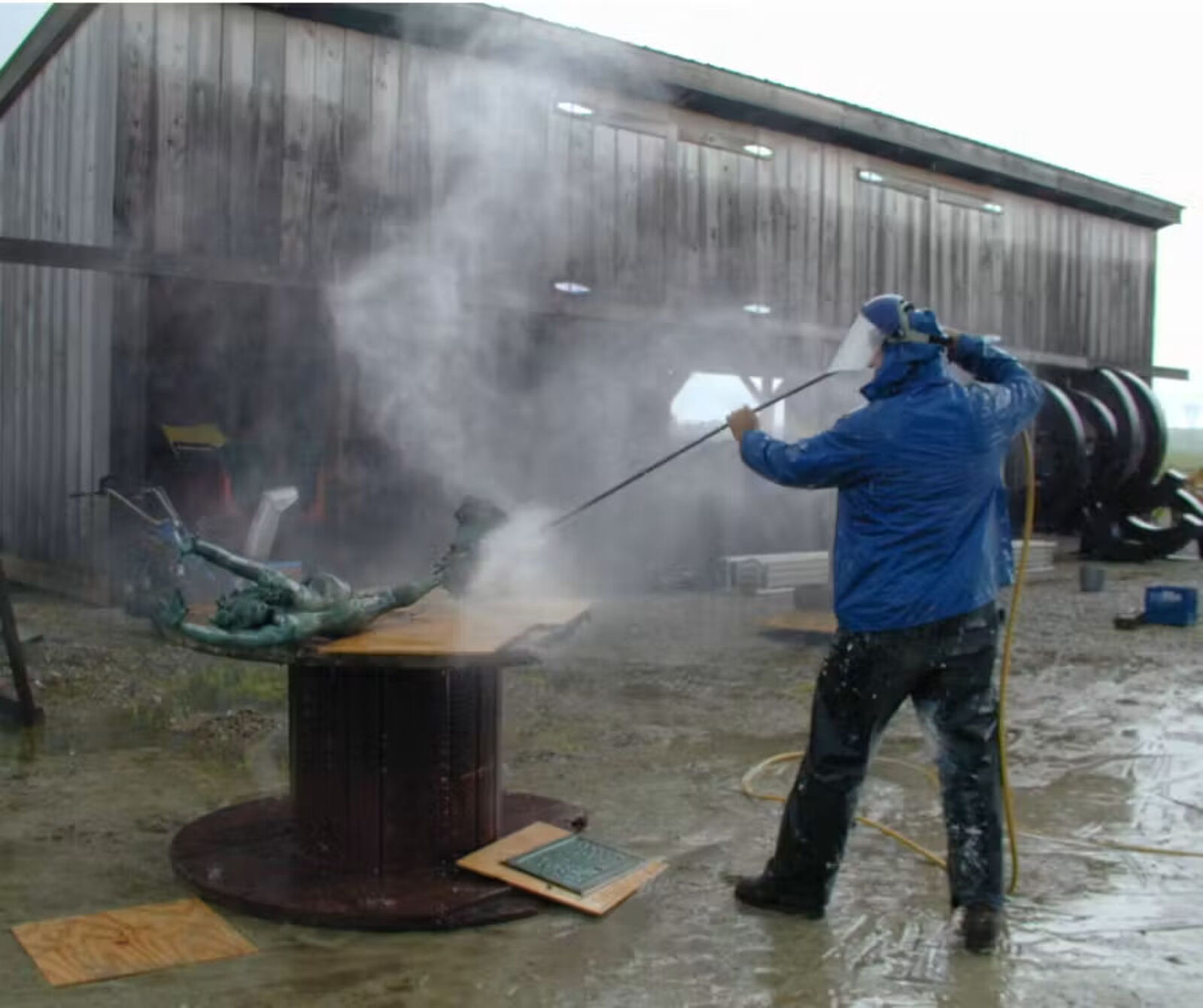
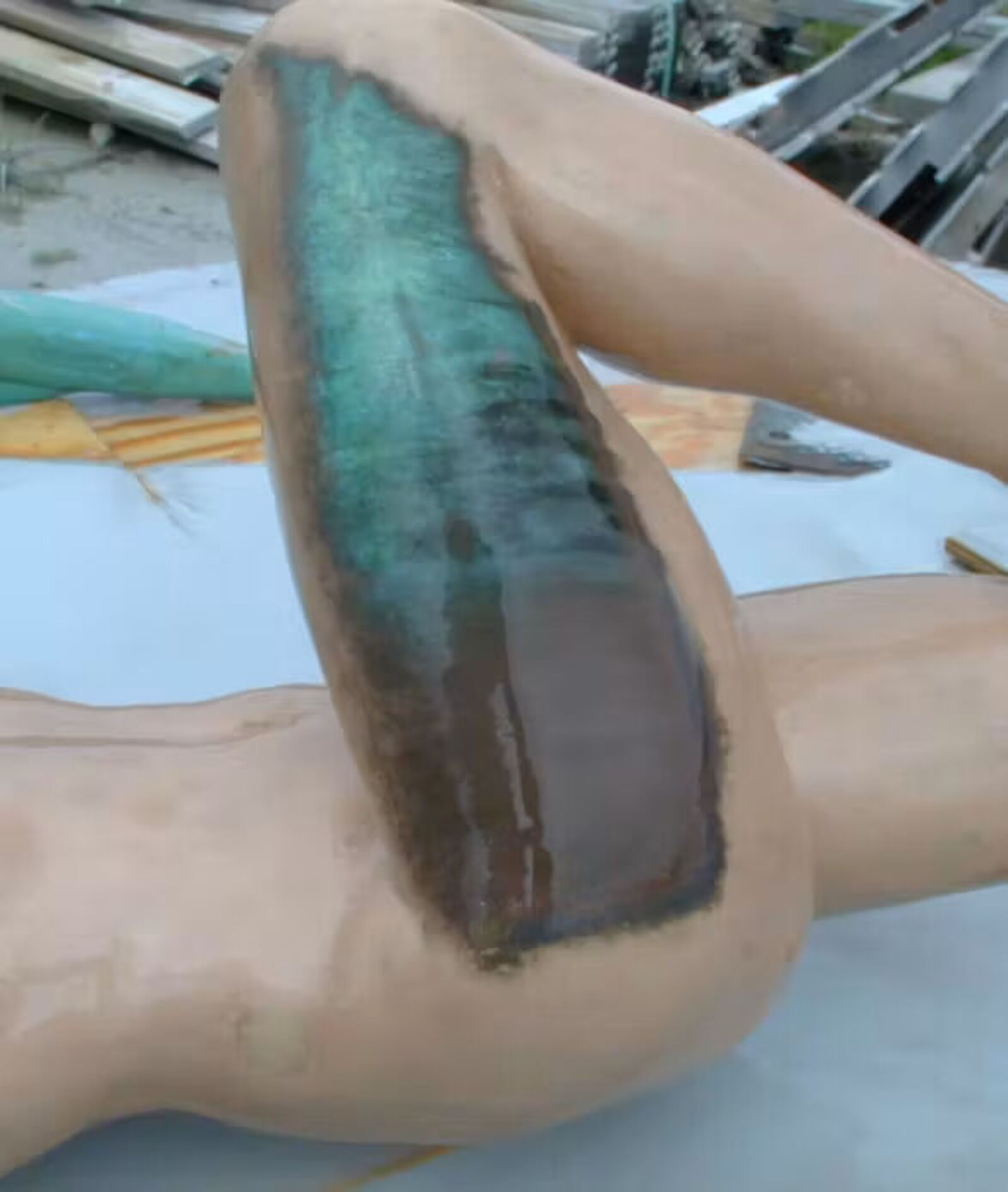
The sculpture was cleaned with finely ground glass, filtered water and compressed air at low pressure, revealing the bare bronze surface. Concrete and mineral deposits were carefully removed with hand tools. The sculpture was then chemically patinated using the traditional method of alternating applications of a chemical solution and heat from a propane torch followed by cold water, which locks the color into the bronze pores. Between applications it was rubbed with bronze wool to blend. It took many applications and modifications to achieve the correct aesthetic appearance. The final color was chosen based on research into the artist’s work. After patination the sculpture was coated with a microcrystalline wax to both protect the sculpture and deepen the color of the patina.
Heads of an Old Man
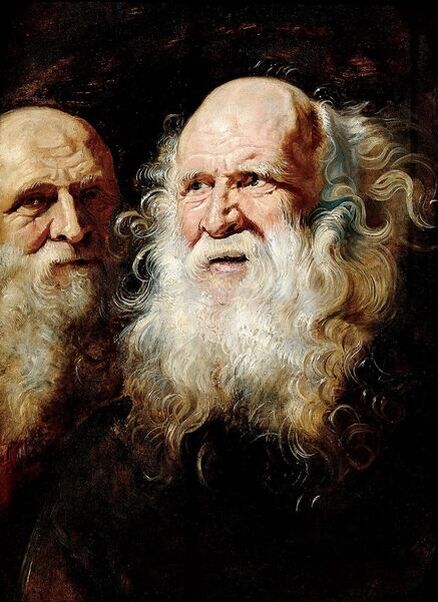
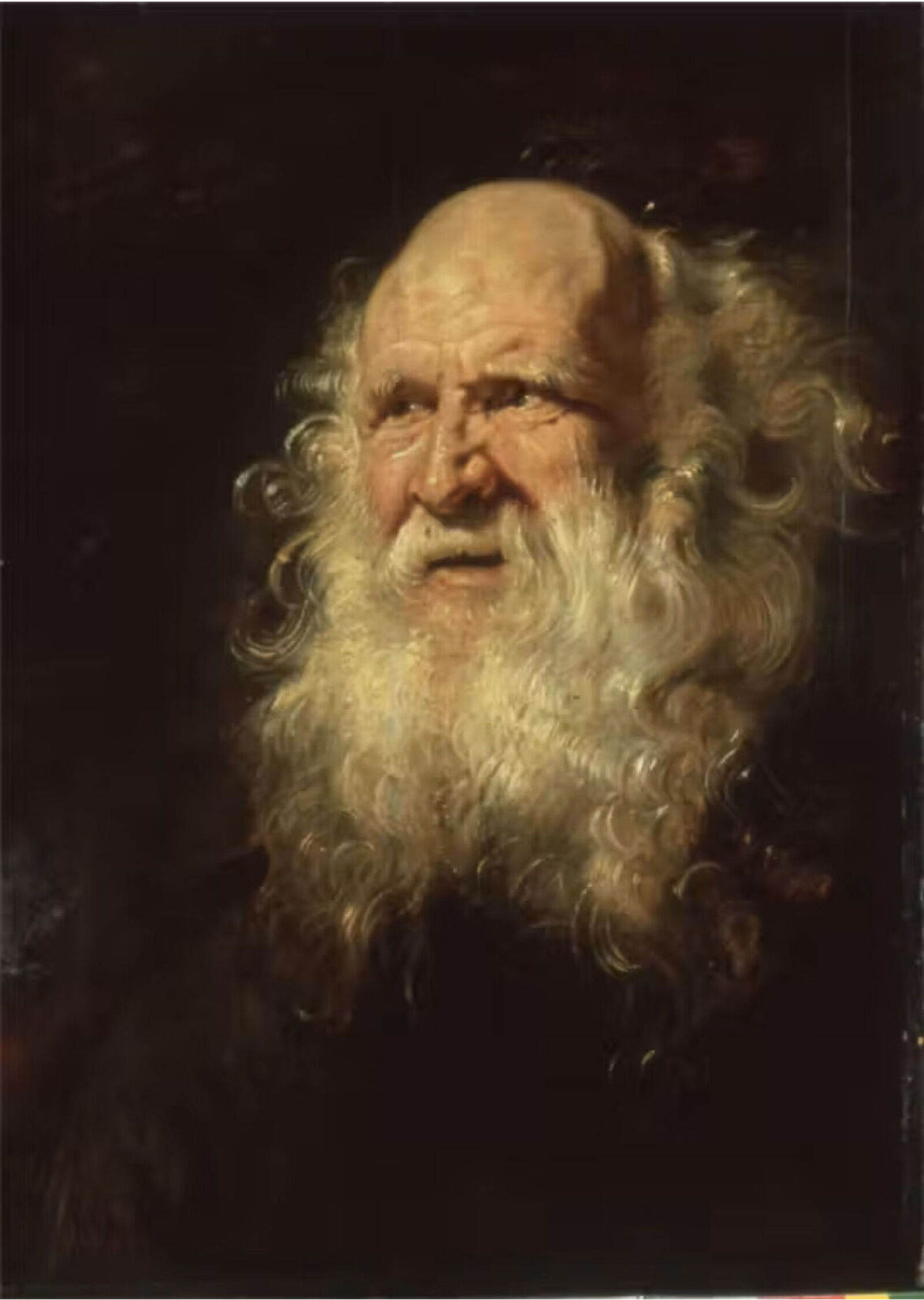
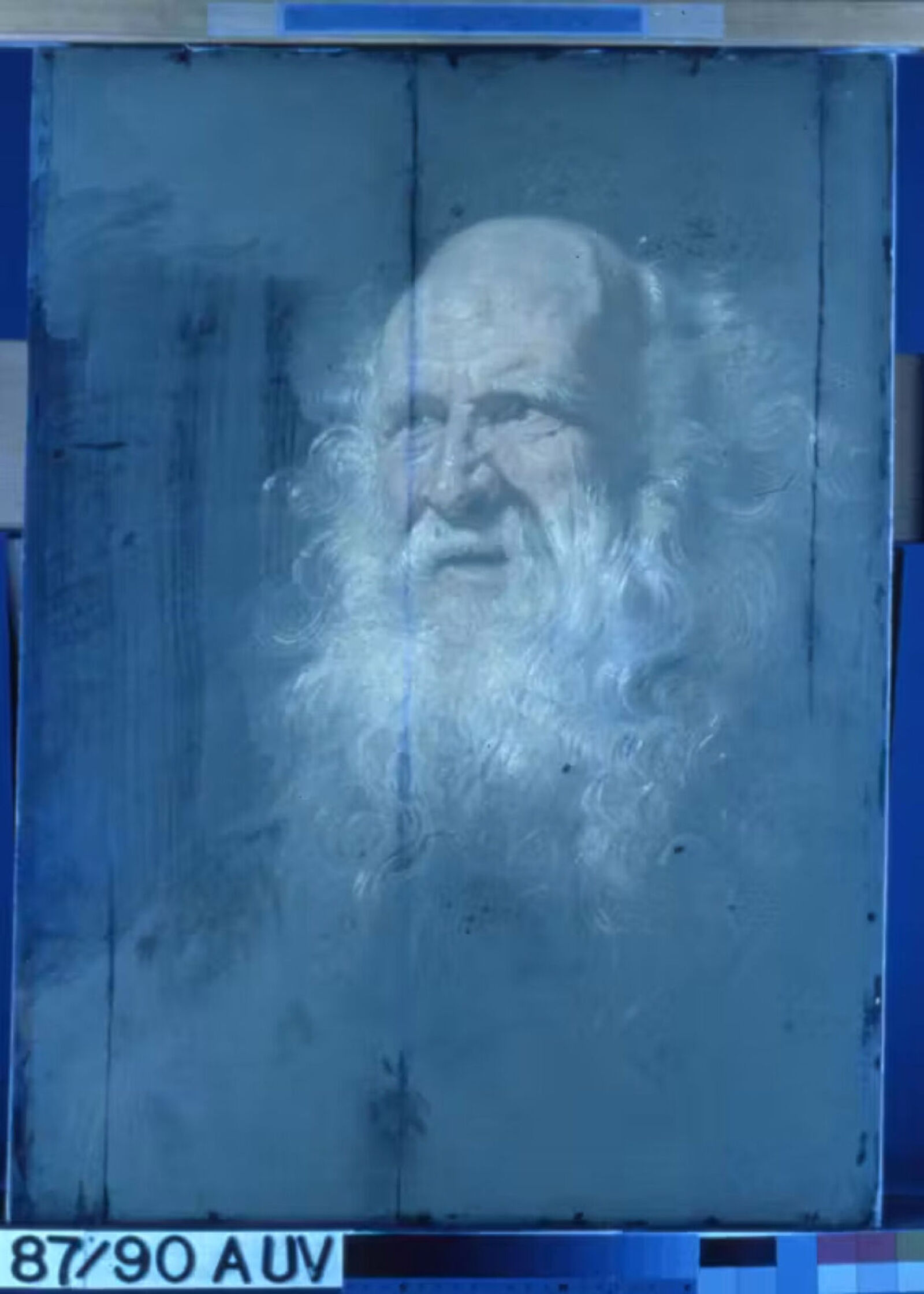
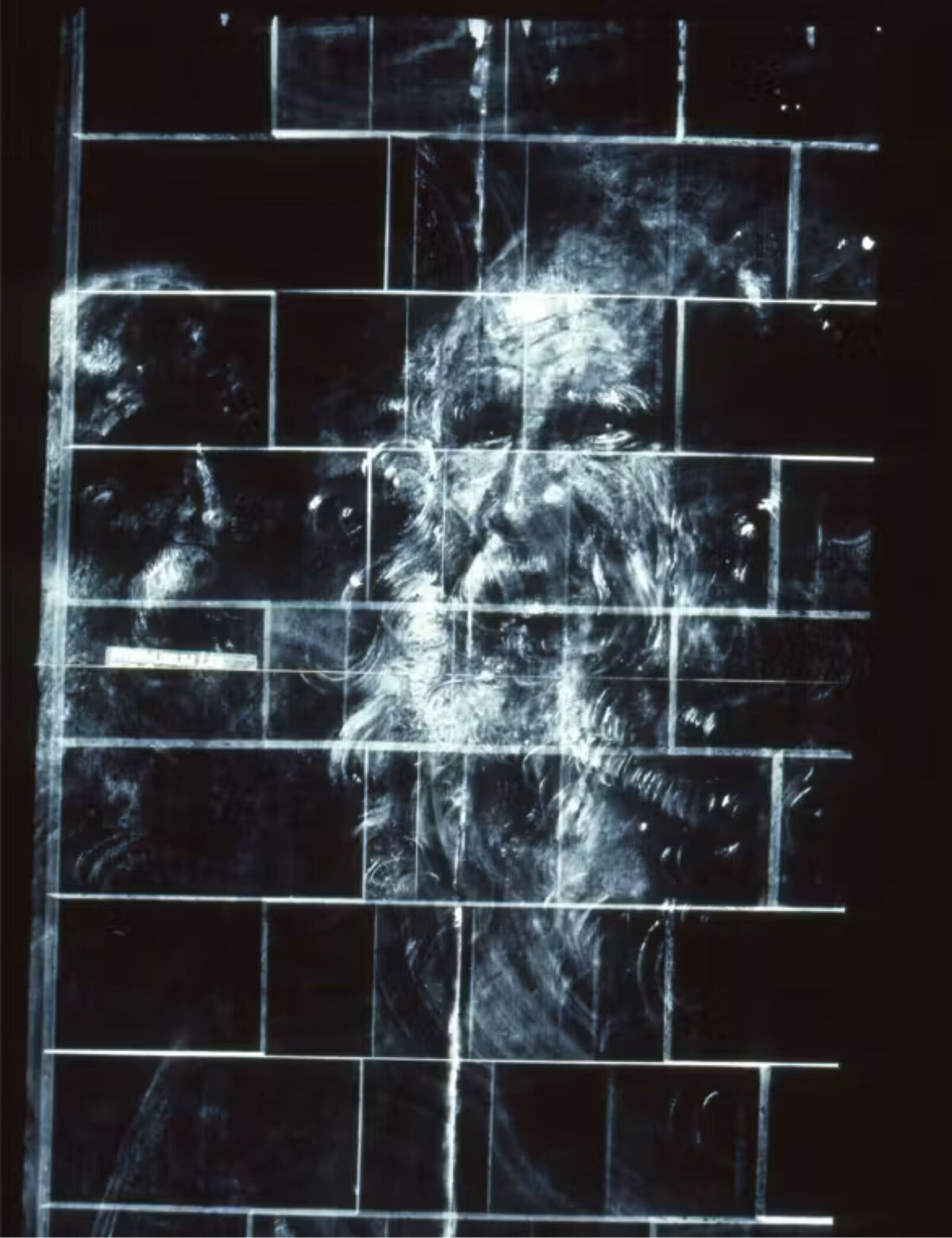
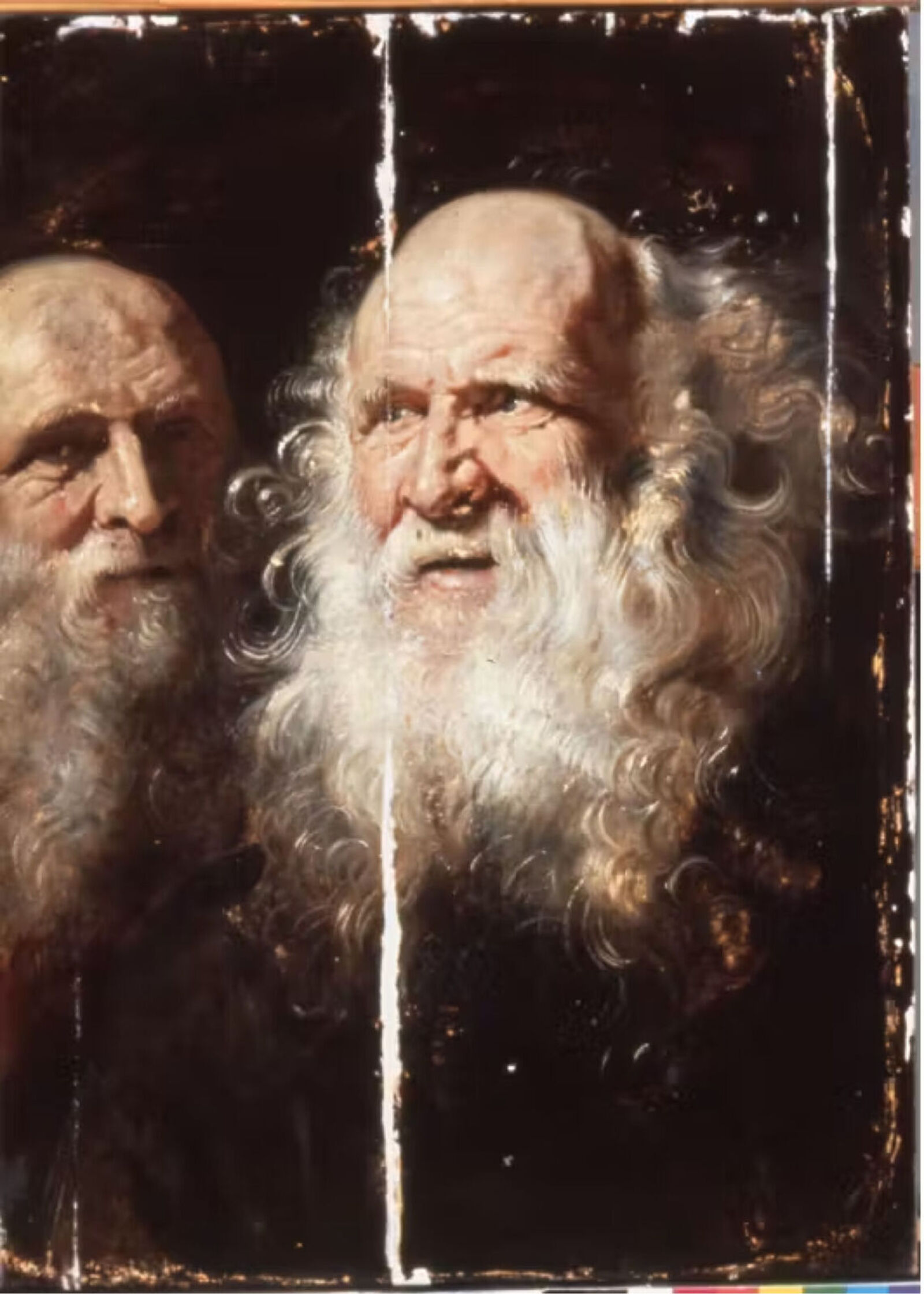
Sir Peter Paul Rubens (Flemish, 1577–1641), Heads of an Old Man, about 1612, oil on oak panel, 26 1/2 x 19 3/4 inches (67.3 x 50.2 cm). Gift of Mr. and Mrs. Carlton W. Smith, 1960.82
A highlight of the DAI’s collection, this painting has twice undergone extensive conservation treatments. The first, in 1967, was to flatten the wooden panel it is painted on, which had warped over time due to exposure to changes in temperature and humidity. This was done by manually thinning the back of the panel with hand tools.
Next, moisture was carefully applied in stages along with blotting paper to reduce the warp by almost an inch. Finally, a series of one-inch-thick balsa wood blocks were attached to the back as reinforcement. (If the panel were to be conserved today, a less extensive structural treatment would likely be done.)
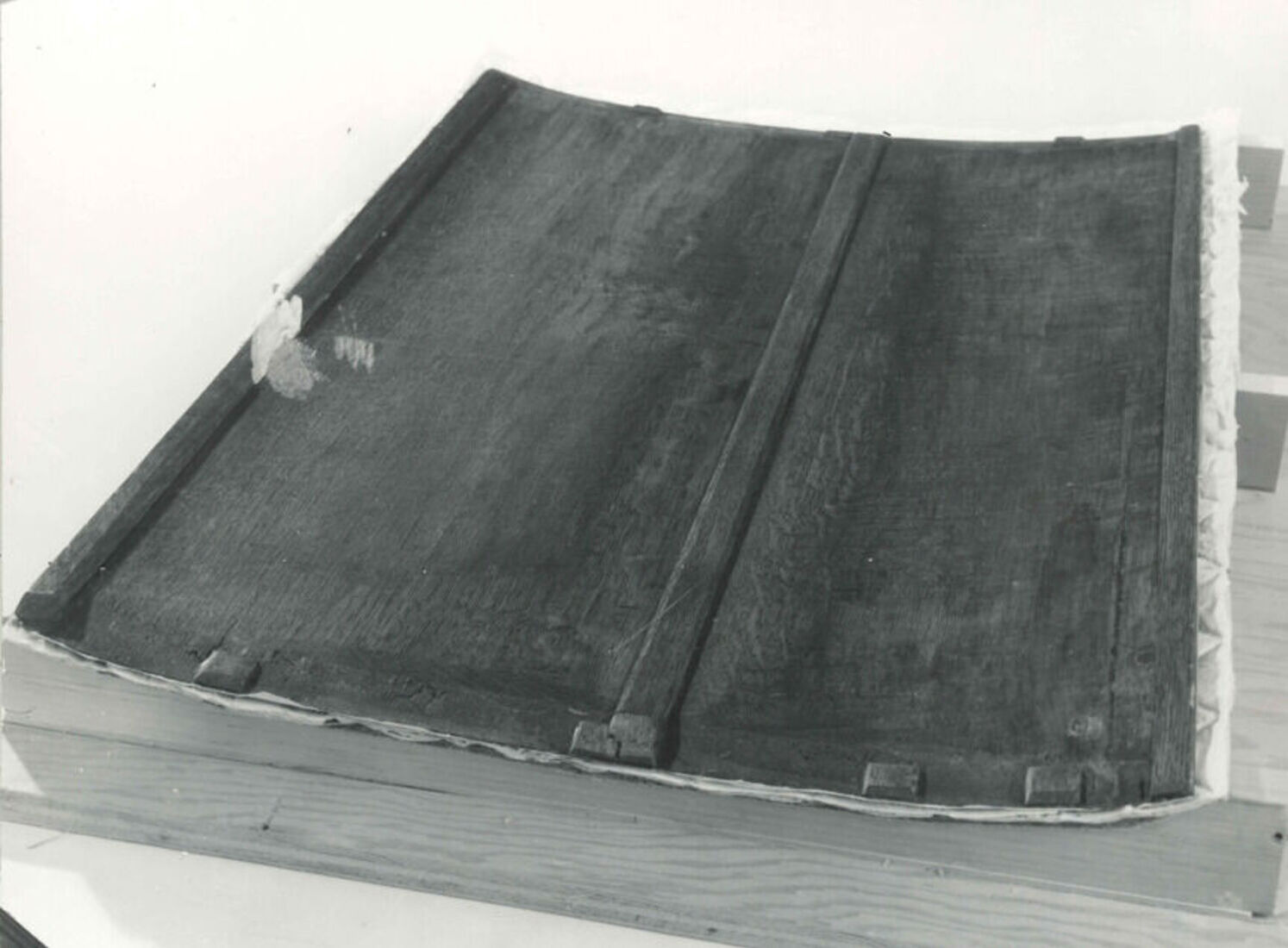
Current back of painting with balsa wood blocks. Back of panel before 1967 treatment.
The second treatment, in 1990, literally gave the painting a new face. Examination under UV light showed a paint layer on the left fluorescing differently than the rest of the painting, a large area of overpaint. Imaging with X-radiograph showed there was a second head under the overpaint. This had been painted over much later by someone other than the artist, most likely to change this study into a portrait, which could make it more attractive to potential buyers. The DAI decided to return the painting to the artist’s original composition. The old, discolored and hazy varnish was removed, followed by the overpaint on the covered face. Old fills in losses were raised and discolored, so these were removed, new fills added and inpainted, followed by a new coat of varnish.
The Holy Family with a Donor in a Landscape
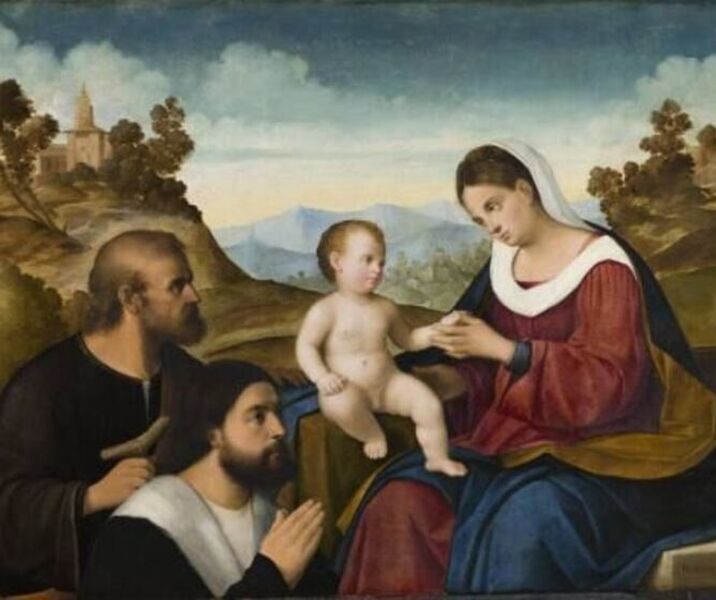
Pier Francesco Bissolo (Italian, active 1492–1554), The Holy Family with a Donor in a Landscape, early 1520s, oil on wood, 31 1/2 x 39 3/4 inches (80 x 101 cm). Museum purchase with funds provided by the John Berry Family, the James F. Dicke Family and the Deaccessioned Works of Art Fund, 1998.41
Key tenets of conservation are to avoid making changes to an artwork if information is incomplete, and to ensure any changes one does make are reversable. When this painting had its old, yellowed varnish removed, sections of overpaint that differed from the original paint were discovered, in particular a few sketchy trees in the background. It was old oil paint that was difficult to remove, but was more than likely not part of the original composition. However, it was not possible to absolutely determine if the trees were later additions.
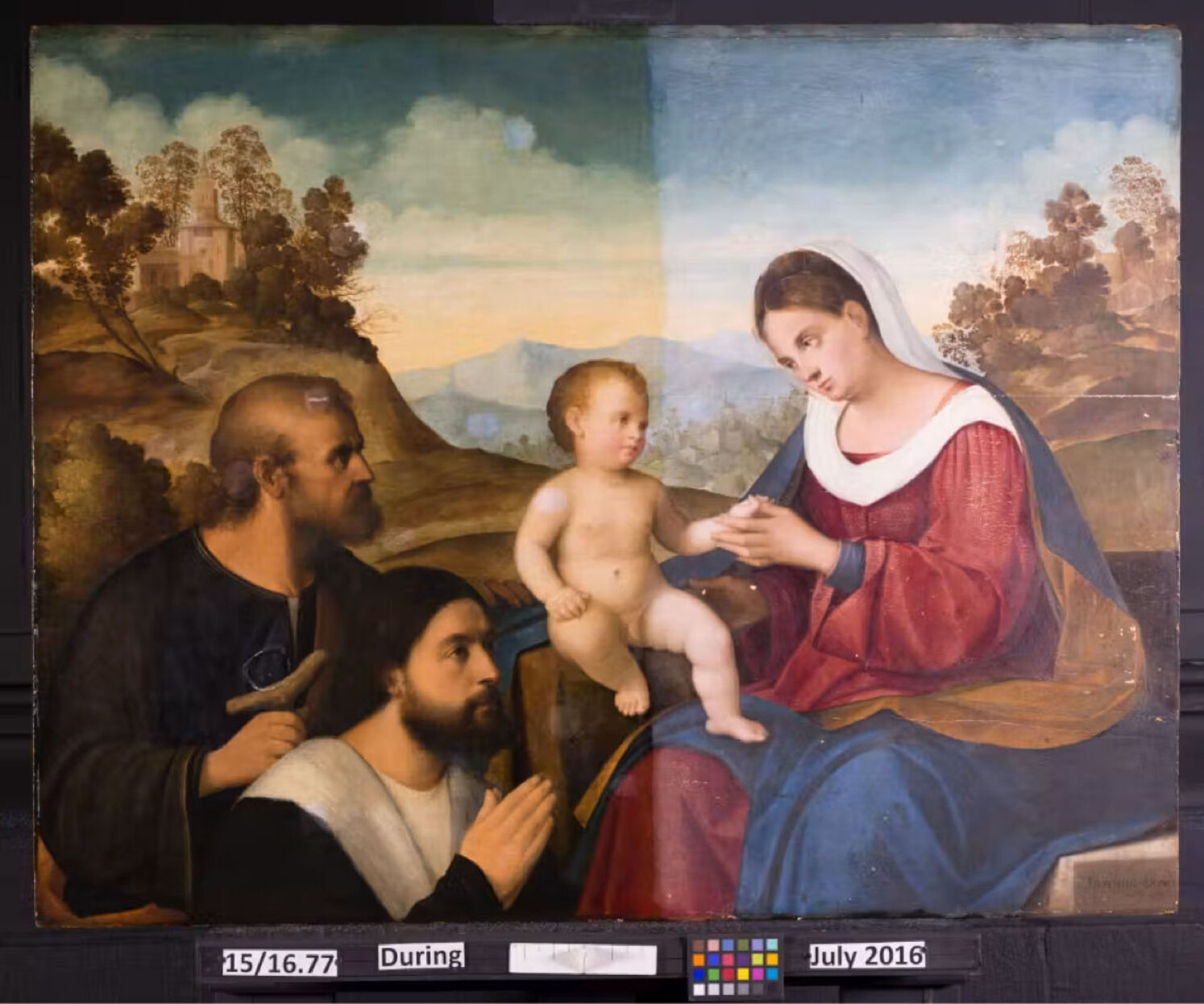
During cleaning, removing old varnish.
The solution was to overpaint the trees in question. The overpainted trees are clearly visible under UV light, further ensuring that the conservator’s work will be identified by future experts. The conservation paint can be easily removed in the future to expose the trees to further analysis.
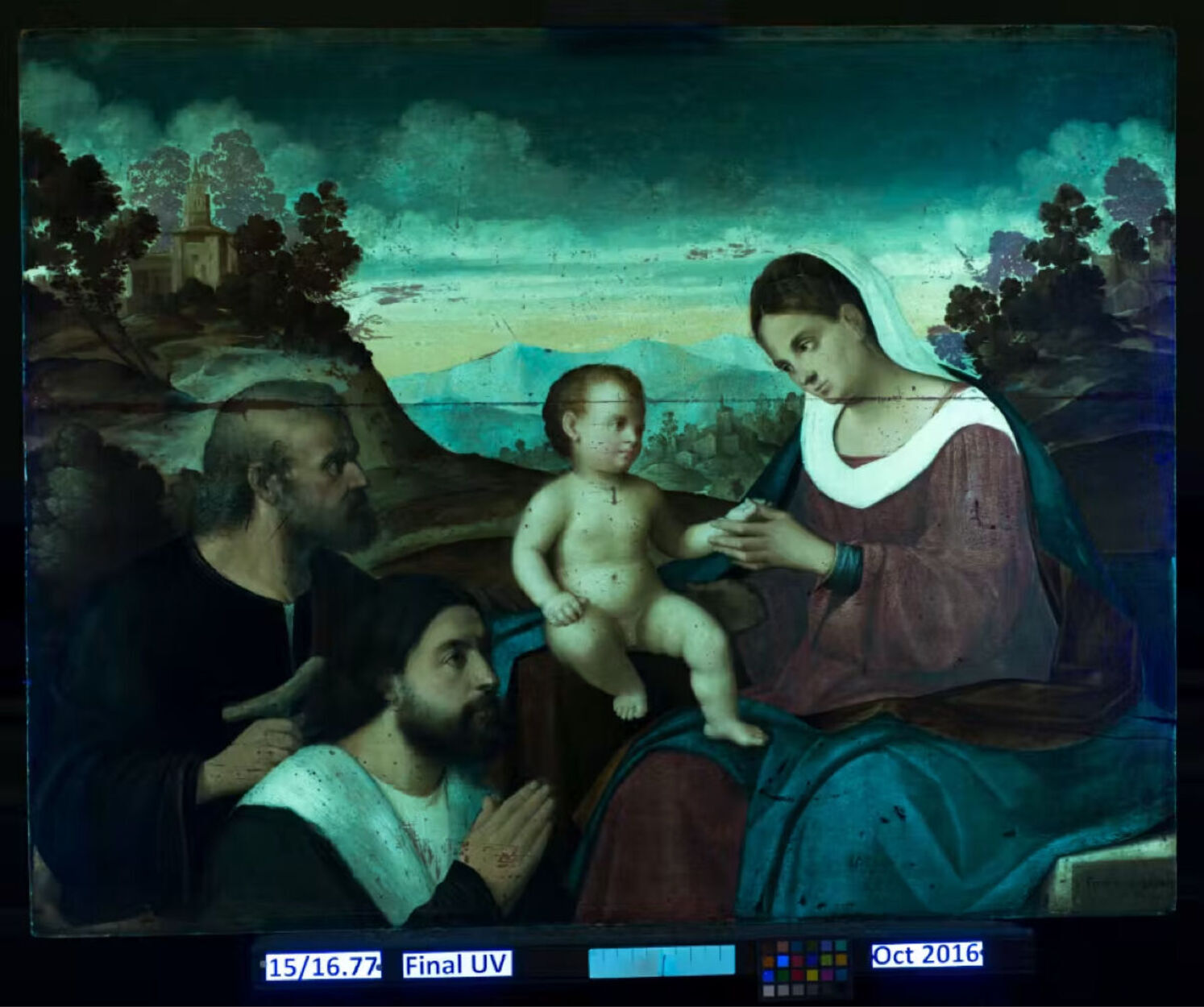
After under UV light, showing trees under the overpaint and the filled horizontal joint.
After cleaning, the old, hard fill in the horizontal join of the wood panel was thinned or removed. Other cracks, scratches and dents were filled with synthetic putty. The painting was given an initial coat of varnish. The join, cracks and losses were then inpainted in an imitative way to blend in with the rest of the painting. A final coat of varnish was applied, helping to bring together all the parts for a harmonious visual appearance.
Funds for the conservation of this artwork generously provided by the Ayers family in honor of Michael G. Ayers.
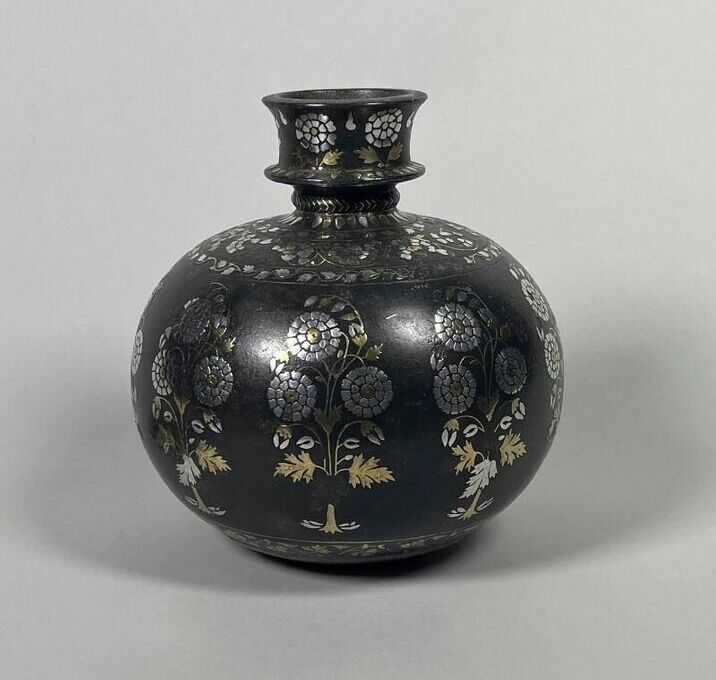
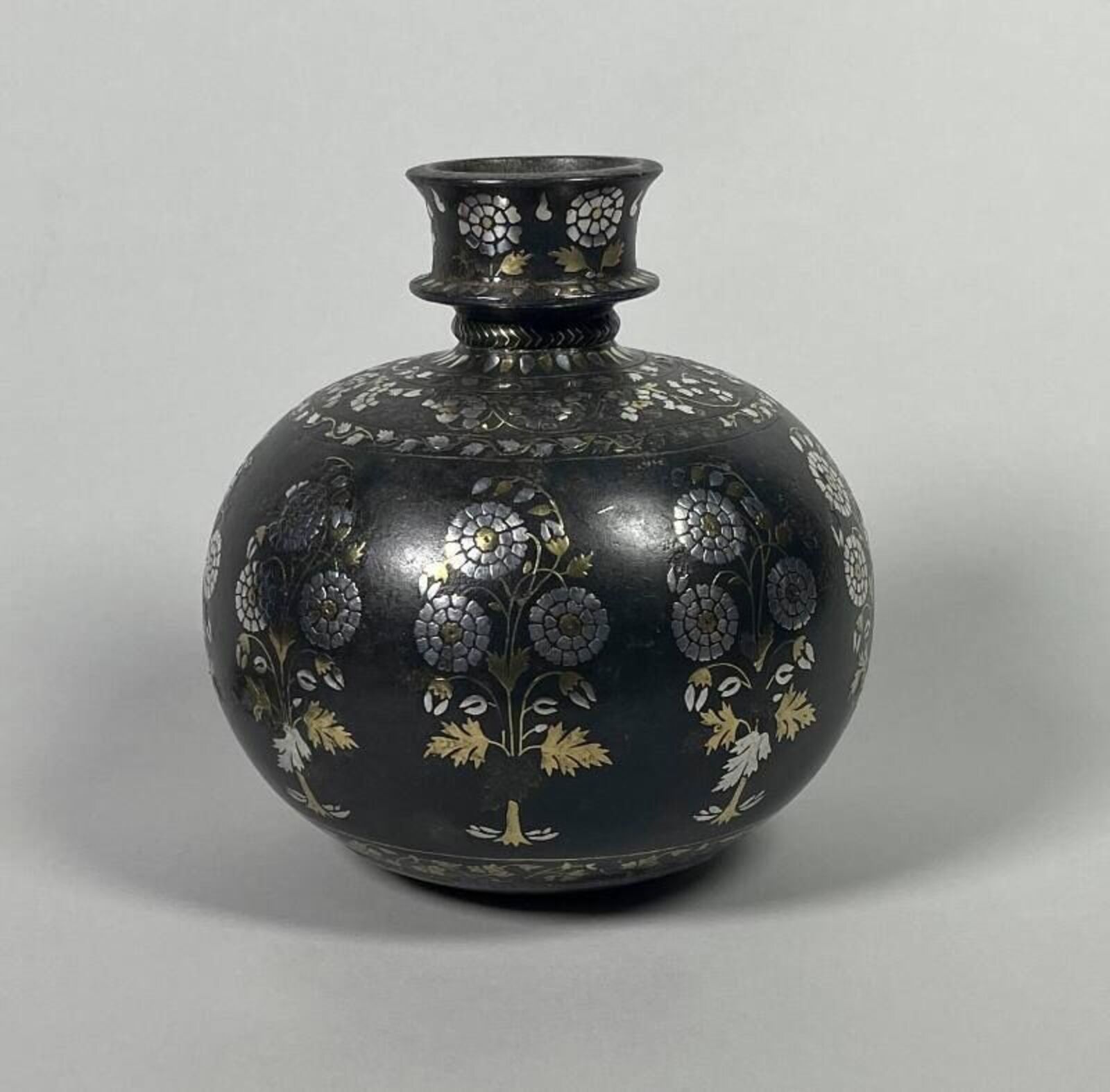
Bidri Huqqa (Water Pipe) Bowl with Roses
Artist(s) unknown (India, Mughal Empire, 1526–1857), Bidri Huqqa (Water Pipe) Bowl with Roses, 17th century, zinc alloy with silver and brass inlay, height 8 inches. Gift of Mrs. Virginia W. Kettering, 1990.100
In 2025, the DAI started a new signature event, “Curated”, a cocktail competition to support conservation.
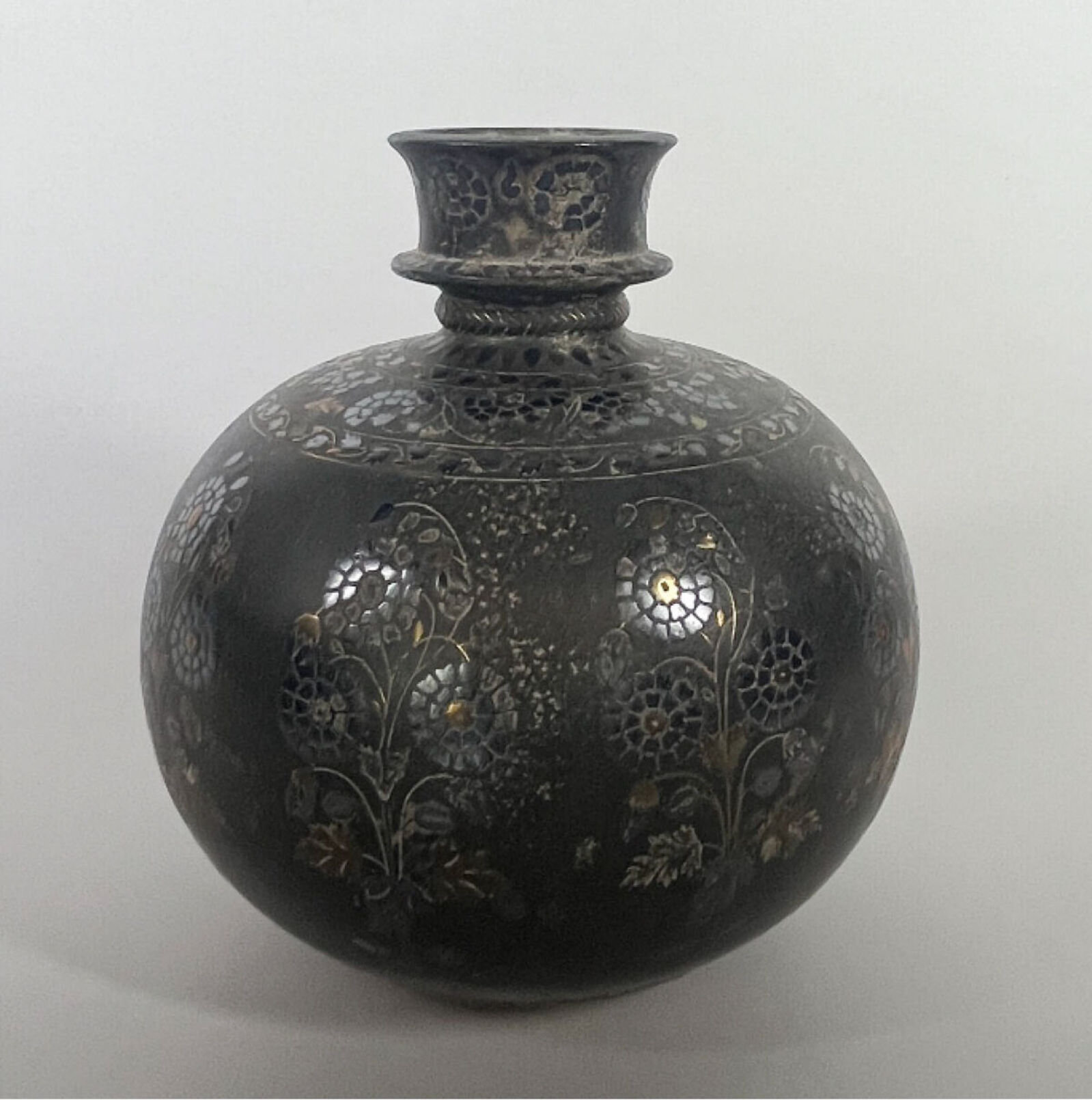
One direct result of this event was the conservation of a huqqa (water pipe) bowl from India. The vessel is an example of Bidri ware, a distinctive Indian craft involving metal inlay. These are commonly waxed for both protection and to create a rich luster. However, over time dirt and grime are trapped and the accumulation obscures what was once a brilliant finish. The silver and brass inlay also tarnish. The recent conservation treatment removed the old wax coating, polished the metal elements and applied a new protective coating.
Funds for the conservation of this artwork generously provided by Audrey and Jeffrey T. Starr, Jr.
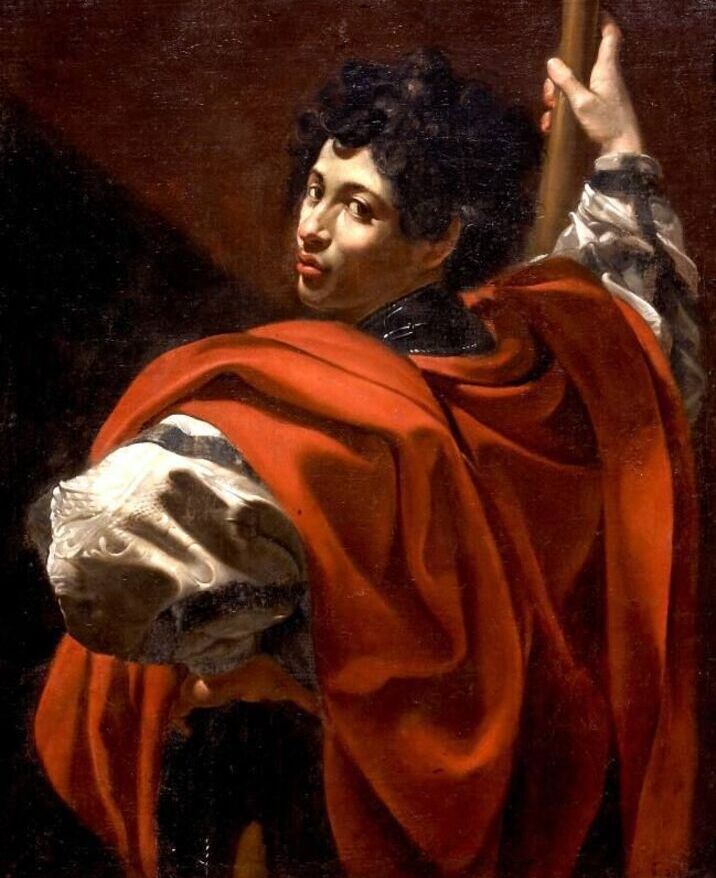
The Halberdier
Simon Vouet (French, 1590–1649), The Halberdier, about 1615–1620, oil on canvas, 41 x 32 1/2 inches. Anonymous gift through Dr. and Mrs. Robert A. Goldenberg, 1999.8
Assessment: Needs work and cleaning. Noticeable losses and abrasions, especially lower left. Discolored retouching, needs revarnish. Add protective, conservation-grade plexiglass glazing.
Estimate with glazing: $4,500–$5,500
Frame: TBD
After Conservation
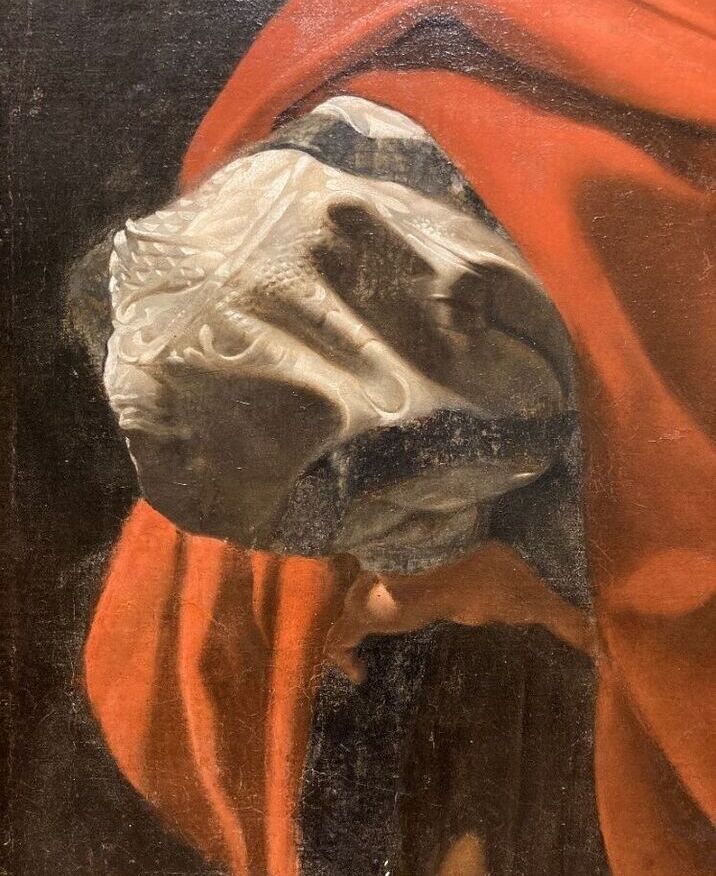
Before closeup of The Halberdier
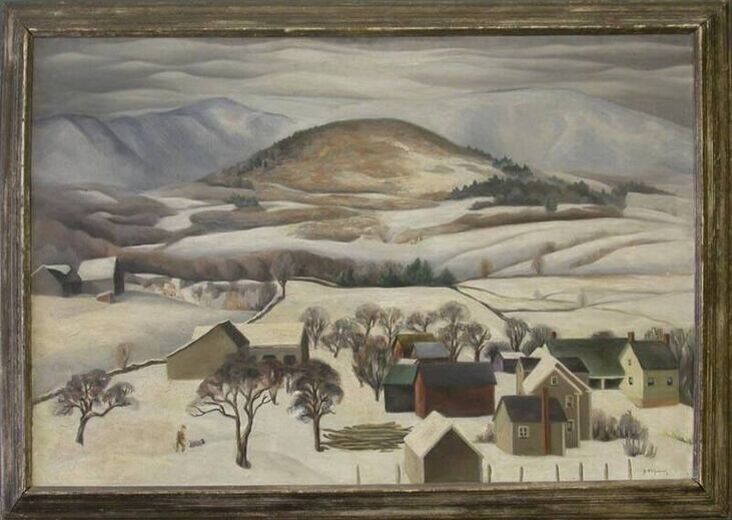
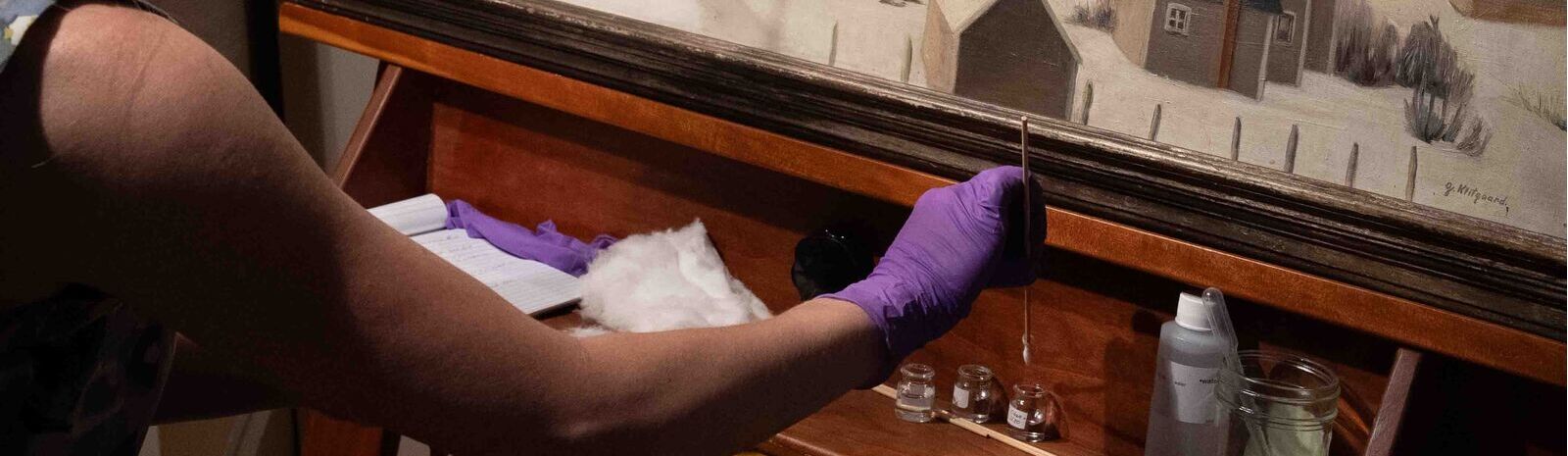
Assessment: This painting has a thick layer of accumulated grime on the surface, obscuring the painted surface underneath. A surface cleaning was begun in 2022 as part of programming for the Special Exhibition, Art for the Ages: Conservation at DAI. During several sessions, a conservator worked on-site so guests to see conservation in action and ask questions. The lower left of the painting was completed, which reveals how much more vibrant the painting, in particular the snow, will look once cleaned. This project will complete the surface cleaning and, if needed, consolidate any cracks in the painted surface.
Estimate: $3,500
Winter
Georgina Klitgaard (American, 1893–1976), Winter, about 1929, oil on canvas, frame 26 x 38 inches. Gift of Mr. John G. Lowe, 1936.30
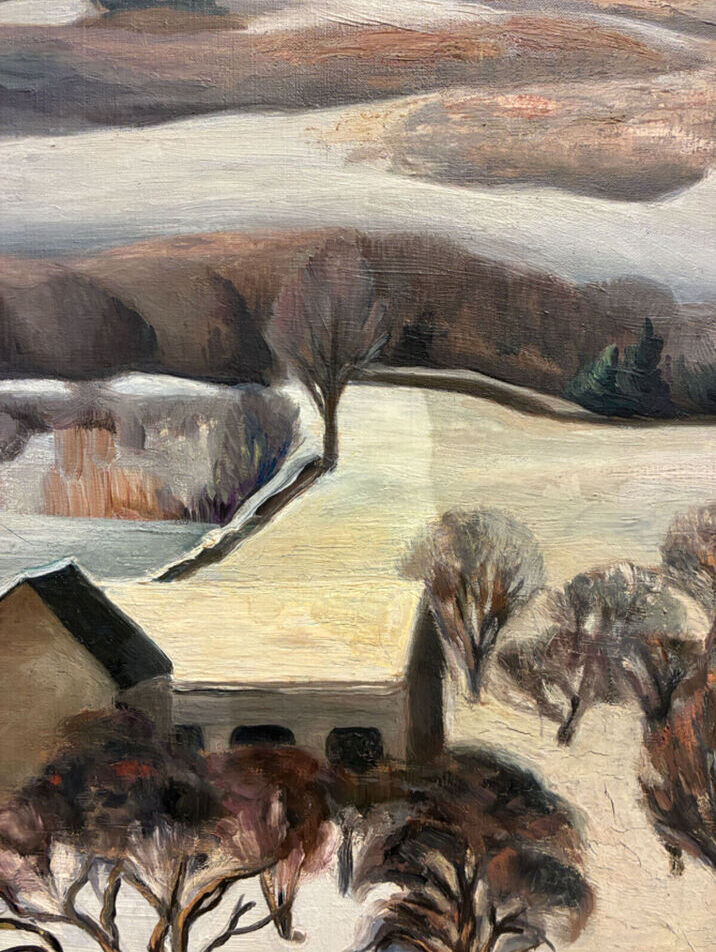
Details showing before and after cleaning (before: right side of each photo; after: left side).